
Navigating the Backlash to Equity, Inclusion and Belonging
October 17, 2024
9:00 AM – 3:30 PM
Emerson Suites
Hosted By

Click the link below to register
Register
Light Breakfast, and Full Lunch are included
Individuals with disabilities requiring accommodations should contact the Ithaca College Center for Equity, Inclusion, and Belonging at eib@ithaca.edu or (607) 274-7011. We ask that requests for accommodations be made as soon as possible.
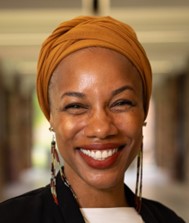
Keynote Speaker: Dr Nia Nunn
Radical Vulnerability
Recognizing the pervasive resistance to building social consciousness, Radical Vulnerability is a teaching method and philosophy created and developed by Dr. Nia Nunn, that helps schools, organizations and institutions engage in a collective self-study to strengthen their culture and sense of community. People need help unpacking painful social realities to create healthier working environments because many experience a paralysis of discussion and action. Radical Vulnerability helps people establish, repair, and maintain healthy working relationships. The presentation will provide a brief overview of an emotional and intellectually poetry workshop series that helps people unveil, unpack, and interrupt biases by reflecting on both our individual and collective identities. The experience will encourage regular rituals to help communities practice compassionate decision-making. The audience will be invited to listen, participate, write, think, feel, and breathe together.
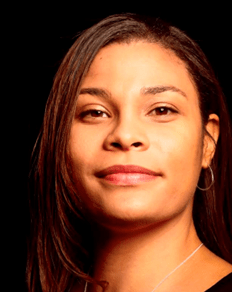
Dr. Nia Nunn is a TEDx speaker (2014) and published author of a series of research articles including Super-Girl: Strength & Sadness in Black Girlhood (2016), a published book called Deep Breath: A Poetry Book and Curriculum (2022), and a recent publication of a digital textbook titled, The Community is My Classroom: A Curriculum of Radical Vulnerability (2024). A teacher, scholar, & Diversity, Equity, & Inclusion (DEI) consultant for schools, universities, & organizations, Dr. Nia Nunn is both a scholar and scientist-practitioner whose methodology and philosophy of Radical Vulnerability helps strengthen the culture of communities.
After receiving a Ph.D. in School Psychology from Michigan State University and B.A. in Early Childhood Education from Clark Atlanta University, Dr. Nia Nunn returned to the community that raised her. Wearing multiple head wraps as a homegrown leader in Ithaca, New York, Dr. Nia Nunn serves as an Associate Professor at Ithaca College, Board President of Southside Community Center, Director of the Community Unity Music Education Program (CUMEP), and former School Psychologist at Beverly J. Martin Elementary School. The synergy of her intersecting roles and craft is rooted in Black consciousness, anti-racist, and abolitionist frameworks. A poet, community leader, and yogi, Dr. Nia Nunn is committed to learning and engaging audiences creatively, intensely, and gracefully.
Breakout Sessions
When Change Brings Conflict
with Sierra DeSalvia
Growing up as an inner-city kid in Syracuse pushed me to become a dynamic civic leader dedicated to helping other mission-driven leaders navigate conflict with a trauma informed, systems level thinking lens. I earned my Peace and Conflict Studies degree in Baltimore and became a conflict management expert leading training in the private sector, nonprofits, courts, prisons, public housing, and schools before going into leadership development, training high-profile leaders of the global majority to run for office and make much needed change. I was honored to be ranked among the best conflict specialists in the Northeast and later featured in Forbes Magazine as a conflict and leadership coach quoted on the importance of facing conflict and interracial collaboration.
Session Summary: A facilitated discussion and guided workshop about challenges faced, shared strategies, and tools to approach charged situations.
Learning Objectives:
- Explore what we can do to prepare ourselves to brace for the backlash, take steps to minimize pushback prior to roll-out, and share strategies for what to do at first signs of conflict.
- Discuss how to care for ourselves, our wholeness, our spirit when faced with resistance. 3-Review tools to interrogate what is causing conflict, determine where things are breaking down and explore tips to take action.
Best Practices for Inclusive Hiring
with Carolyn Chow and Toral Patel
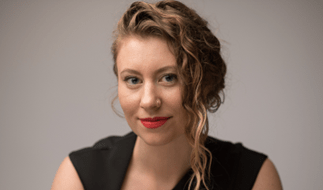
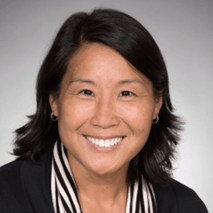
Carolyn Chow’s career has been devoted to diversity and inclusion in higher education. She came to Cornell after 19 years of serving as Director of Admissions and Student Diversity at the University of Washington School of Nursing. She joined Cornell University in May 2019 as the Staff Recruiter and Inclusion Program Lead for the College of Veterinary Medicine, before becoming a Talent Acquisition Partner in Cornell’s Office of Talent Attraction and Recruitment in October 2022.
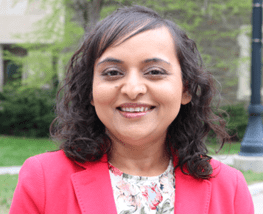
Toral Patel is a first-generation college graduate from the University of Central Florida where she received a Masters in Management, specializing in Human Resources. She has spent the initial phase of her career in the field of recruiting before transitioning to Inclusion and Belonging. In her current role of Senior Consultant for Inclusion and Belonging, her responsibilities includes working on DEI-related projects for the staff population that encourage true inclusion and understanding as well as community-building across the University.
Session Summary: This presentation will delve into best practices for inclusive hiring, which prioritizes recognizing and valuing the diverse qualities and perspectives that candidates contribute to an organization. We will explore strategies that go beyond simply recruiting from underrepresented groups or individuals with disabilities, aiming to create a truly equitable process for all applicants. Our focus will be on combating recruitment bias and ensuring fairness throughout the hiring process.
Learning Objectives:
- Best Practices for Inclusive Hiring
- Combating Bias and ensuring fairness in the hiring process
- What’s worked for Cornell
Antiracist Results-Based Accountability
with Erika Bernabei
Erika Bernabei, Equity & Results (she/they, white, queer) works with small and large organizations, collaboratives and executive leadership teams to use a racial equity-centered impact-driven methodology to transform how systems work – strategically disrupting common practices and replacing them with actions that address the root causes of the problem. Erika is an expert in Antiracist Results-Based Accountability (AR RBA), and has successfully worked with groups across the US transform their work. Prior to E&R, Erika worked at PolicyLink for nearly a decade and as an Assistant Commissioner in the New York City Department of Homeless Services.
Session Summary: Groups often do not know how to bridge the gap between a commitment to racial equity and day-to-day work – moving from the head (understanding) and heart (feeling) to the hands (action). Antiracist Results-Based Accountability (AR RBA) begins with impact and backs into solutions to ensure that they are selected with an eye to the root causes of the racial inequity. In this session, we will start with underlying the disparities participants see within their own work and use a racial equity reflection-and-action-based learning loop to move from intention to tangible strategic action.
Learning Objectives:
- learn the 7 principles of racially equitable impact
- understand the basics of the AR RBA methodology
- practice using the tool on a current racial inequity


Neurodiversity at Work: Cultivating an Inclusive and Thriving Environment
with Lydia Dolch
https://www.linkedin.com/in/lydia-dolch-openthelid/
Lydia Dolch is an Empowerment Coach and the Founder of Open the Lid. She works closely with organizations in the I/DD world, providing in-person and virtual workshops to help support and empower individuals and their teams. Her approach creates inclusive, supportive environments where everyone thrives.
Session Summary: The workshop explores the benefits of a neurodiverse workforce, emphasizing its role in enhancing creativity and innovation. Participants collaborate to identify best practices and improvements using universal design principles, with a focus on creating actionable steps for implementation.
Learning Objectives:
- Educate participants on the importance and benefits of neurodiversity in the workplace, including its potential to enhance creativity, problem-solving, and innovation.
- Develop and share best practices for supporting neurodiversity within the organization, with a focus on using universal design principles to improve current practices.
- Create actionable steps for implementing identified improvements, establishing accountability partnerships to ensure follow-through and ongoing progress.
Balancing Affirmative Action Compliance Requirements with Voluntary DE&I Programs
with Alex Ubbink
Alex is a Principal AA/EEO Consultant at HR Works, specializing in affirmative action plan development, supporting clients through OFCCP audits, and providing virtual EEO coordinator support in the healthcare industry. She is the Chair of the local Industry Liaison Group, providing opportunities for federal contractors and OFCCP and EEOC representatives to interact and collaborate.
Session Summary: The U.S. Supreme Court ruled that Affirmative Action programs for College and University admissions are unlawful. The implications of this decision have caused confusion for employers who are required to write an Affirmative Action Plan due to the federal contracts or subcontracts they hold, or due to their FDIC/NCUA status. During this session, we will discuss the intersection between Affirmative Action, Equal Employment Opportunity, and Diversity, Equity, and Inclusion programs.
Learning Objectives:
During this session, participants will learn the difference between Affirmative Action in College admissions and a federally required Affirmative Action Plan (AAP). We will review what makes an employer subject to Federal AAP requirements, and will discuss how an internal Diversity, Equity, and Inclusion program, and not necessarily your AAP, may be scrutinized with the Supreme Court decision

Psychological Safety at Work
with Shasta Savage
Shasta Savage is a trainer, speaker, consultant, leadership coach and certified accessible yoga instructor. With a background in the trauma-informed lens and human rights prospective, she provides support on topics such as DEIJA, leadership development, non-profit management, employee well-being, and community-care. She integrates leading practices with an intersectional approach to support the greatest outcomes.
Shasta currently serves as Director of Leadership Development & Consulting Services for the Human Services Coalition of Tompkins County and Vice President of the DCTC Board.
Session Summary: Psychological safety is a core concept in fostering inclusion and belonging. Understanding and applying tenets of this perspective may increase employee engagement, motivation, innovation and collaboration. Research illustrates that workplaces that embrace a culture of psychological safety may contribute to employee retention and well-being.
Learning Objectives:
- Understand the Concept of Psychological Safety: Participants will be able to define psychological safety and explain its importance in the workplace.
- Identify Key Behaviors That Promote Psychological Safety: Participants will learn to recognize and apply specific behaviors that foster a psychologically safe environment.
- Develop Strategies to Enhance Psychological Safety: Participants will formulate actionable strategies for creating and maintaining psychological safety within their teams.
Work Opportunity Tax Credits
with Ruth Pillittere ES Manager 2 / NYS WOTC Coordinator
NYS Dept. of Labor

Land Acknowledgements
with Sachem Sam George
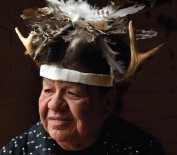
Sachem Sam George is one of 10 Sachems (chiefs) for the Cayuga Nation, representing the Bear Clan. He was condoled in April 2005 Having grown up on Seneca Nation territory (Cattaraugus) and having learned Seneca language and customs, Sachem
George sought out to learn his Cayuga heritage. The
Haudenosaunee people are a matriarchal society, his mother Cayuga, he knew it was important to learn what it meant to be Cayuga. When he moved back to his homeland in 2014, as one of the first important tasks, he oversaw the building of the Cayuga
School House, modeled after a contemporary long house. Sachem George has participated, along with the other returning Cayugas, in learning his language and ceremonies. He is taking that knowledge and wisdom to ensure a good future for his people.
Sachem George sits on the Haudenosaunee Environmental Task Force addressing environmental degradation in Haudenosaunee communities by developing culturally-appropriate environmental
education, restoration, and protection strategies. He is a member of the Haudenosaunee External Relations Committee which works on political and governmental structures beyond the borders of
Haudenosaunee Nations. Sachem George is on the Elders Council for Native Community Services for Buffalo and Niagara Falls. In 2019 he was awarded the Bundled Arrow Award for his service to Native American communities. Sachem George has felt it important to be good neighbors and promotes the
Great Law which is created and maintained by the Good Mind- a mind that is both “used well” and used for good’, since one will inevitably lead to the other.
Sachem Sam George lives with his wife in Union Springs, Cayuga Territory. He has 2 sons, a daughter and 3 grandchildren that live in the greater Buffalo
area.
Event Sponsorship
If you are passionate about advancing DEI initiatives, we invite you to review our attached sponsorship form and sponsor at the level that feels most in line with your commitment to DEIJAB (Diversity, Equity, Inclusion, Justice, Accessibility and Belonging). Together, let’s confront the backlash and pave the way for a more equitable and inclusive future. Please reach out with any questions administrator@diversityconsortium.org.
Download a Sponsorship Form
 Diversity Consortium of Tompkins County